Global Surface Treatment Equipment & System Solutions — Since 2002

久昌机械
Get a Quote
Global Surface Treatment Equipment & System Solutions — Since 2002
久昌机械
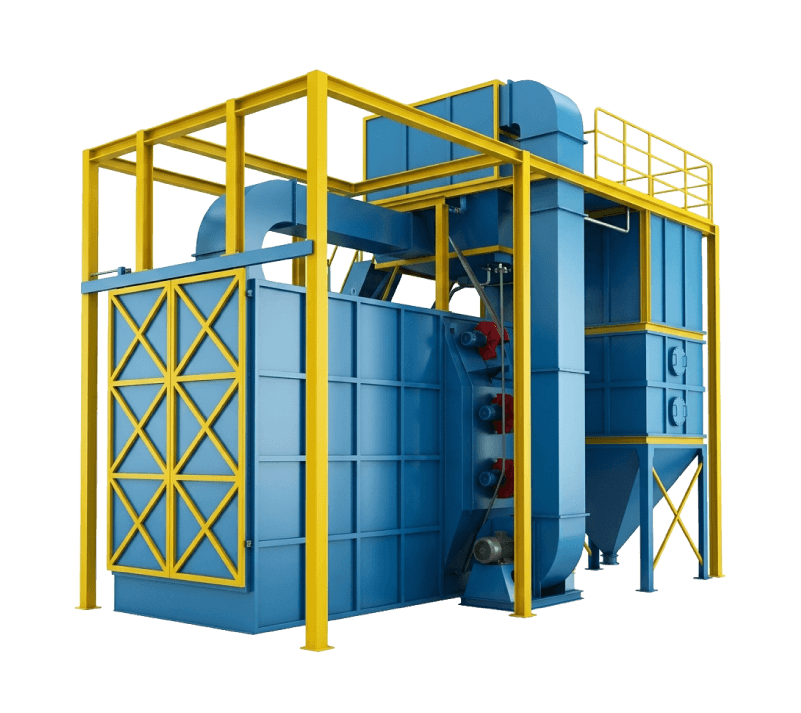
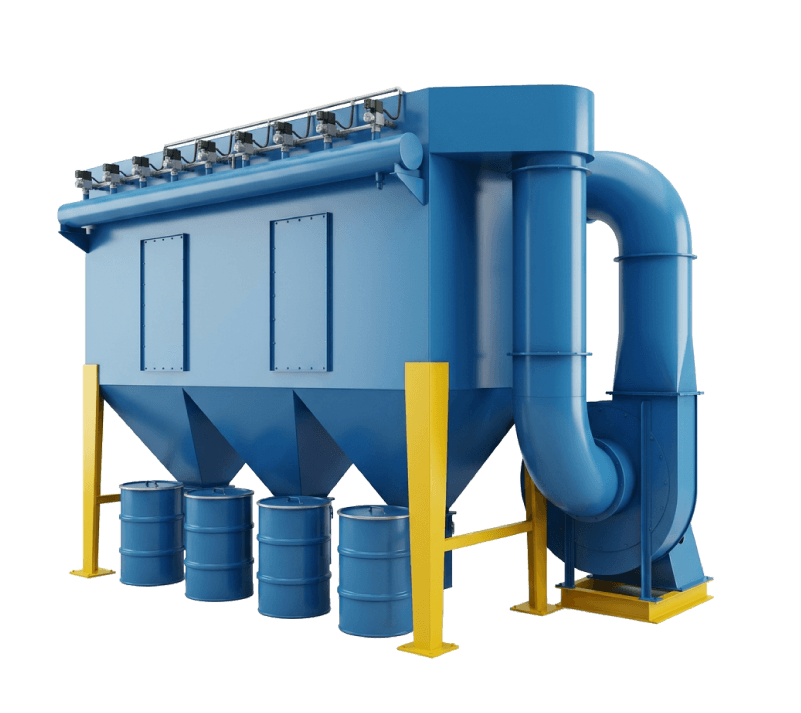
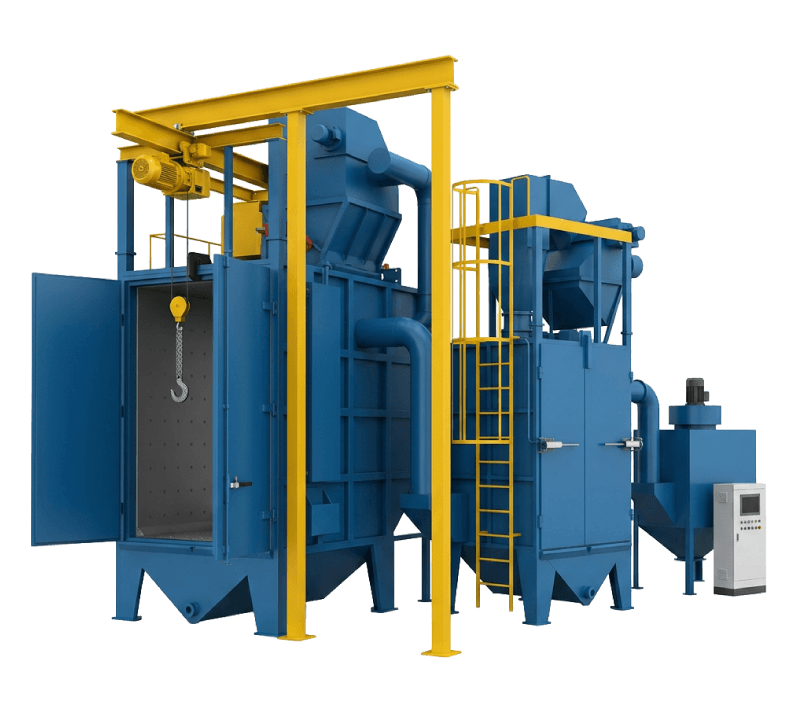
We evaluate your production targets, raw materials, plant layout, process route and automation level — then design and deliver the whole line, plus turnkey scope on request.
HOOK CAPACITY
600 kg – 10 000 kgBlast wheels
2 – 4 units · direct driveTotal blast rate
up to 1 000 kg/minWear blades life
2 500 – 3 000 h · ≥58 HRCThe mesh belt / tumble belt through-feed shot blasting machine is specialized equipment designed for batch surface cleaning of small and medium-sized castings, forgings, stampings, and mechanical parts. The mesh belt model uses a steel wire mesh belt or wear-resistant rubber belt to convey workpieces. Workpieces pass smoothly through the blasting chamber on the conveyor belt, with no collision and no cleaning blind spots. It is especially suitable for thin-walled, collision-sensitive cast iron and aluminum alloy parts. After treatment, surface cleanliness can reach Sa2.0-Sa2.5, with roughness of Rz25-60 um.
During operation, workpieces are placed on the conveying mesh belt, which moves continuously and slowly into the blasting chamber. Multiple blast wheels project steel shot from upper and lower angles to clean the workpieces, so all surfaces receive uniform shot impact. The shot is recycled through the recovery system, and dust is filtered by the dust collector before compliant discharge.
Loading -> entering the cleaning chamber -> shot blasting -> exiting the cleaning chamber -> blow-off and shot removal -> unloading.
Mesh belt conveying allows workpieces to pass smoothly without collision, making it suitable for collision-sensitive parts.
Shot recovery rate is >=98%, abrasive consumption is low, and wear parts use high-chromium wear-resistant materials for longer blade life.
The machine supports continuous production-line operation, delivers high efficiency, and is suitable for medium and large batch production.
A fully enclosed cleaning chamber with multilayer sealing curtains is matched with a pulse cartridge dust collector, keeping dust emissions <=30 mg/m3.
Multiple blast wheels are arranged through 3D simulation optimization, ensuring that all workpiece surfaces, including internal cavities and blind spots, are fully cleaned.
Mesh belt/tumble belt specifications, number of blast wheels, and cleaning chamber size can be custom-engineered according to user requirements.
PLC control with variable-frequency speed regulation supports fully automatic loading/unloading and unmanned operation.
| Parameter | Uni | QWD400 | QWD600 | QWD800 | QWD1000 |
|---|---|---|---|---|---|
| Mesh belt width | mm | 400 | 600 | 800 | 1000 |
| Max. workpiece size | mm | 200x150 | 300x200 | 400x250 | 500x300 |
| Throughput | t/h | 0.5-1.5 | 1-3 | 2-5 | 3-8 |
| Conveying speed | m/min | 0.5-3 | 0.5-3 | 0.5-4 | 0.5-5 |
| No. of blast wheels | sets | 2 | 3 | 4 | 6 |
| Blast wheel power | kW | 7.5x2 | 7.5x3 | 11x4 | 11x6 |
| Total blasting capacity | kg/min | 160 | 360 | 480 | 720 |
| Shot diameter | mm | dia.0.8-1.5 | dia. 0.8-1.5 | dia1.0-2.0 | da1.0-2.0 |
| Elevator capacity | t/h | 15 | 25 | 40 | 60 |
| Dust collector airflow | m/h | 3000 | 5000 | 8000 | 12000 |
| Initial shot charge | kg | 400 | 800 | 1200 | 1800 |
| Surface cleanliness grade | grade | Sa2.0-2.5 | Sa2.0-2.5 | Sa2.0-2.5 | Sa2.0-2.5 |
| Installed power | kW | approx.11 | approx.18 | approx 28 | approx.40 |
Note:
Omitto iuris dictionem in libera civitate contra leges senatusque consulta; caedes relinquo; libidines praetereo, quarum acerbissimum